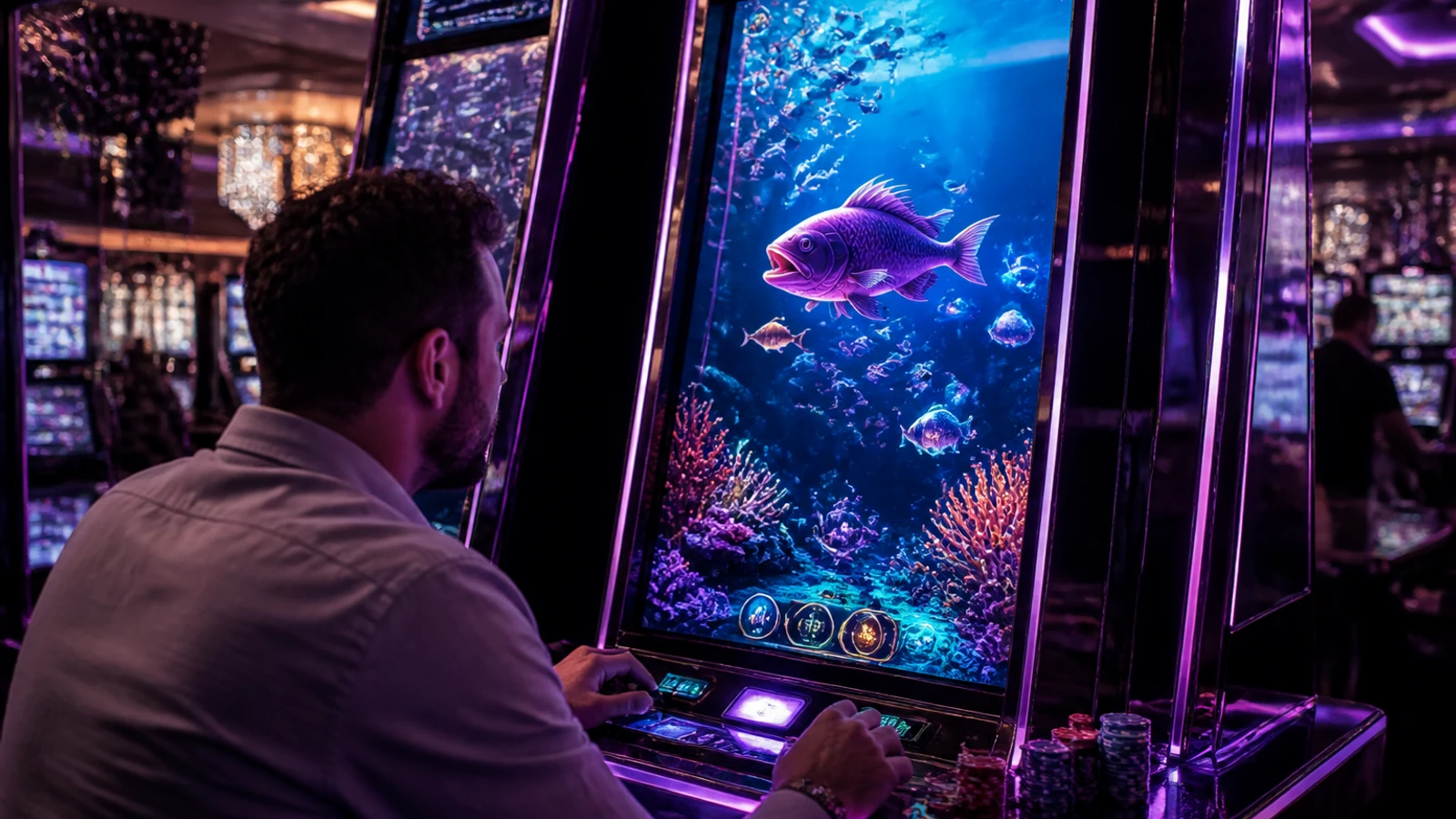
Arcade fishing games replace paylines with ammunition spend, room intensity, and target selection. Before your first session on a title like Dark Domain Hunt, understand how room intensity changes target difficulty, how ammunition cost turns into a per-minute spend rate, and why short, tracked sessions suit fishing better than long slot-style grinding. This guide walks through KAgaming fishing mechanics step by step so your first room feels familiar rather than confusing.
Arcade fishing games replace paylines with ammunition spend, room intensity, and target selection. Before your first session on a title like Dark Domain Hunt, understand how room intensity changes target difficulty, how ammunition cost turns into a per-minute spend rate, and why short, tracked sessions suit fishing better than long slot-style grinding. This guide walks through KAgaming fishing mechanics step by step so your first room feels familiar rather than confusing.
If your casino experience so far is mostly slots, your first fishing room can feel disorienting. There are no reels, no paylines, and no spin button in the familiar sense. Instead you enter a room populated with moving fish, each carrying a visible multiplier value, and you spend ammunition credits firing at targets before they swim off screen. Hit a fish and its value credits to your balance minus the ammunition spent; miss and the ammunition is simply gone. That loop is easy to describe in one sentence and easy to misjudge in practice, especially during your first few sessions.
This guide uses KAgaming fishing titles—Dark Domain Hunt in particular—as the working example, because the studio's room intensity tiers and ammunition-cost model are representative of how arcade fishing behaves across the category on GGLBET. The same underlying concepts apply whether you are trying Dark Domain Hunt specifically or another fishing room in the catalog: room intensity, ammunition pacing, and target choice govern the experience far more than any single lucky shot.
Fishing sits in the same broad arcade family as other KAgaming action titles such as Cluck Chaos and Fantasy Jungle. The key difference from slots is pacing and control: a fishing room runs as long as you choose to keep firing, which hands you far more moment-to-moment control but also far more opportunity to lose track of how much you have spent. Understanding that distinction early is one of the most useful things a new fishing player can learn.
Because fishing rewards accumulate in small increments across many shots rather than in one resolving spin, it is easy to underestimate total spend during a session. A shot that costs a small ammunition fee feels inexpensive in isolation, but fired continuously for twenty minutes it adds up to a real number. This guide treats ammunition as a running cost—similar to a per-minute rate—rather than as a series of disconnected micro-bets, because that framing matches how the math actually behaves.
By the end of this guide you should understand what room intensity controls, how to budget ammunition spend before you sit down, how to pick targets sensibly instead of firing at anything that moves, and why short, tracked sessions beat open-ended play in this category. None of this is a strategy for guaranteed profit—fishing outcomes are governed by certified game math, not aim alone—but a clear process makes the format far more enjoyable and far less likely to run past your intended budget.
It also helps to understand why the format exists alongside slots rather than replacing them. Arcade fishing grew out of physical arcade cabinets where players competed for shared boss fish in a social room, and that lineage still shows up in some multiplayer room variants today. Digital versions on platforms like GGLBET kept the target-and-ammunition core while smoothing out the pacing for solo mobile sessions, which is why the mechanics can feel closer to a light action game than to a traditional casino product even though the underlying return math works the same way as any other regulated title.
A handful of core mechanics explain almost everything you will encounter in a KAgaming fishing room. Learning them before your first session prevents most of the early confusion new players run into.
Room intensity is the primary setting you choose before entering a fishing room, and it functions differently from a slot's bet-per-spin control. Selecting a higher intensity tier increases the difficulty and value spread of fish that spawn—more valuable targets appear more often, but so do faster-moving, harder-to-hit fish, and the room can carry a higher effective spend rate. Low intensity is the right starting point for a first session regardless of how confident you feel from other arcade games, because room behavior needs several minutes to show its actual pattern.
Ammunition cost is set independently of room intensity in most KAgaming titles, meaning you choose both which room to enter and how much each shot costs within that room's allowed range. The two settings combine to determine your effective spend rate—shots fired per minute multiplied by ammunition cost per shot. A player firing rapidly at low-value fish can spend more per minute than a player firing occasionally at clearly valuable targets, even in the same room at the same ammunition cost.
Target value is displayed directly on each fish before you commit a shot, which is a meaningful difference from slots, where you cannot see a specific symbol's payout before the reels stop. This visibility is useful but also creates a temptation to fire at everything, since even small fish look 'free' individually. Treating every shot as a real cost, not a negligible one, is the single biggest mental adjustment new fishing players need to make. It also means the skill in fishing is closer to triage than to prediction: you are constantly choosing which visible opportunity is worth the visible cost, rather than guessing at hidden odds the way you would with a slot's paytable.
Volatility in fishing shows up as a spend-versus-catch pattern rather than as rare mega-wins layered on top of steady small ones, the way high-volatility slots often work. A high-volatility fishing room can run long stretches where catches barely cover ammunition spent, punctuated by an occasional high-tier or boss fish that shifts the session. That pattern is normal for the category and is precisely why a pre-set budget and stop time matter more here than in lower-variance formats.
Boss fish and timed room events are the feature layer that replaces bonus rounds and free-spin wheels in a slot title. A boss window typically requires sustained fire while the target remains active, sometimes shared among multiple players in the same room, and rewards a larger multiplier than the room's normal target range. These windows are exciting, but they are also where new players most often abandon their planned ammunition budget, since the visible size of a boss fish's potential payout can make the cost of chasing it feel smaller than it actually is in the moment.
Walk through these steps in order for your first fishing session. Skipping the setup steps is the most common reason new players spend more than they intended in their first room.
Fishing game session basics
Arcade fishing games replace paylines with ammunition spend, room intensity, and target selection. Before your first session on a title like Dark Domain Hunt, understand how room intensity changes target difficulty, how ammunition cost turns into a per-minute spend rate, and why short, tracked sessions suit fishing better than long slot-style grinding. This guide walks through KAgaming fishing mechanics step by step so your first room feels familiar rather than confusing.
Set GGLBET limits before opening the game. Sign in to GGLBET and open responsible gaming settings to configure a deposit or loss limit before navigating to any fishing title. Decide your session budget and a stop time in advance, and write both down somewhere outside the game itself. This step matters more for fishing than for spin-based games because the format makes it easy to keep firing shot after shot without a natural pause point.
Open the game information panel first. Before entering a room, open Dark Domain Hunt or your chosen fishing title from the fishing category or the KAgaming provider filter, then read the information panel for RTP, ammunition cost ranges, and room intensity descriptions. This panel is the authoritative source for the live figures in your market—use it rather than relying on memory from a previous session or a friend's description.
Choose the lowest room intensity for your first session. Select the lowest available intensity tier even if you have played other arcade titles before. Low intensity spawns a gentler mix of targets and gives you time to learn aim timing, fire controls, and the room's pacing without a high spend rate working against you while you are still learning the interface.
Set ammunition cost to the minimum allowed. Within your chosen room, set the ammunition cost per shot to the lowest value the panel allows. This keeps your effective spend rate low while you learn which fish tiers are worth targeting. Raising ammunition cost is something to consider only after a full session at minimum cost, not something to adjust mid-room based on how the first few shots felt.
Fire at targets whose value clearly exceeds shot cost. Resist firing at every fish that crosses the screen. Compare each target's displayed multiplier against your ammunition cost and prioritize shots where the value clearly justifies the spend. Ignore boss fish and high-tier targets during your first session—they require sustained fire and timing you have not built yet, and chasing them early usually just increases spend without improving your odds of a hit.
Track your spend rate for a fixed block of time. Play a pre-decided block—twenty minutes is a reasonable starting length—and note total ammunition spent against total catch value at the end of the block without adjusting mid-way. This turns an abstract feeling of 'the room is cold' or 'the room is hot' into an actual number you can use to decide whether to continue, pause, or stop.
Decide whether to continue only at the end of a block. When your timed block ends, compare the result to your written budget and stop time. If you are within your plan and want to continue, start a new block rather than playing indefinitely. If a boss fish or high-value target happens to appear right as your block ends, let it go—the format will present other opportunities, and extending sessions to chase a specific spawn is one of the most common ways players exceed their planned spend.
Review session history before your next visit. After you finish, open your GGLBET transaction history or the game's in-session log and compare actual spend and catch value against your original plan. Use that comparison to decide your intensity and ammunition settings for next time, rather than adjusting reactively in the middle of a session based on a short losing or winning streak.
These habits come from how KAgaming fishing rooms actually behave in practice, and they apply whether you are trying Dark Domain Hunt or another title in the fishing category.
Habits that keep learning useful
✓Hold one room intensity for the entire session instead of raising it mid-room after a cold stretch
✓Treat ammunition spend as a per-minute running cost, not as a series of negligible individual shots
✓Fire selectively at targets with clear value relative to cost rather than at every fish on screen
✓Use fixed time blocks to check spend versus catch rather than playing open-ended
✓Schedule fishing sessions separately from crash-style titles so reactive cross-play does not extend total time spent
✓Reread the in-game paytable periodically, since fish tier weights can change with title updates
✓Exit on your planned stop time even when a high-tier target is visible on screen
The table below contrasts a first fishing session against a typical slots session to highlight where the two formats diverge, using Dark Domain Hunt as the fishing reference point.
General category comparison for orientation only—confirm live RTP, cost, and intensity settings in each game's information panel.
General category comparison for orientation only—confirm live RTP, cost, and intensity settings in each game's information panel.
Aspect
Fishing session (e.g. Dark Domain Hunt)
Typical slots session
Core control
Room intensity and ammunition cost per shot
Bet size per spin and paylines or ways selected
Session length driver
Player-controlled, shot by shot, can run long in wall-clock time
Spin-by-spin, often paced by auto-spin settings or manual taps
Visible information before committing stake
Fish multiplier value shown before you fire
Symbol payouts fixed by paytable, but spin outcome unknown beforehand
Volatility pattern
Spend-versus-catch clustering across many shots in a room
Spin-to-spin variance shaped by hit frequency and bonus round triggers
How is a fishing game different from a slot machine?
Slots resolve each wager in a single spin against fixed paylines and a paytable. Fishing games like Dark Domain Hunt instead put you in a room where you choose targets and fire ammunition at moving fish, each showing its own multiplier value. There are no reels or paylines—wins depend on which targets you hit across a session rather than on a single spin outcome.
What does room intensity actually control?
Room intensity is a tier you select before entering a fishing room, and it changes the mix and difficulty of fish that spawn. Higher intensity tends to bring more valuable targets but also faster, harder-to-hit fish and a higher effective spend rate. Starting at the lowest intensity tier is the recommended approach for a first session in any new fishing title.
Is skill or aim important in fishing games?
Aim affects which targets you are able to hit within a room, but spawn timing, fish tier weighting, and hit resolution are governed by certified game math running behind the interface. Better aim can improve shot efficiency, but it does not change the long-run return built into the game—treat outcomes as high-variance entertainment rather than a skill-based path to guaranteed profit.
How much should I budget for a fishing session?
Set a specific session budget before opening the game, ideally reflected in a GGLBET deposit or loss limit, and think of ammunition spend as a per-minute running cost rather than a series of tiny individual bets. Track actual spend against a fixed time block—twenty minutes is a reasonable starting length—so you have a concrete number to compare against your plan.
Should I raise room intensity if my first session feels slow?
No. Raising intensity in reaction to a cold stretch is one of the most common mistakes new fishing players make, since a single session is not enough data to judge a room's typical pattern. Hold your chosen intensity for the full planned session and only consider changing it, deliberately, before a future session based on a full block of tracked results.
Can I play fishing games on desktop instead of mobile?
Yes, through your GGLBET browser session. KAgaming fishing titles are optimized for portrait mobile play with thumb-reachable fire controls, but mouse-based aiming works on desktop as well. Mobile portrait layouts remain the primary design target, so some players find desktop play slightly less ergonomic despite being fully functional.
Where do I find the RTP for a specific fishing title?
Open the title—Dark Domain Hunt or another fishing game—from the fishing category or provider filter on GGLBET, then check the in-game information panel. That panel is authoritative for your market and reflects any recent updates to the paytable; treat editorial summaries, including this guide, as general orientation rather than a substitute for the live figure.
What should I do after a losing session in a fishing room?
Review your session history or transaction log, compare actual spend and catch value against your original plan, and stop for the day if you have reached your budget or stop time. Avoid immediately reopening the game at a higher intensity or ammunition cost to try to recover losses—that reactive pattern is one of the most common ways sessions run past their intended limits.
Are boss fish worth chasing as a beginner?
Not in your first few sessions. Boss fish and similar timed events require sustained fire and timing that takes practice to use efficiently, and the visible size of the potential payout can make new players spend well beyond their planned ammunition budget in pursuit of a single window. Learn base target selection and pacing at low intensity first, and treat boss encounters as a bonus outcome rather than a goal to actively chase.
Quick reminders to apply while you follow this GGLBET guide.
Start every new fishing title at the lowest room intensity, even if you are experienced with other arcade games
Set ammunition cost to the minimum allowed until you understand a room's pacing
Keep one hand free from the fire button when playing on mobile to reduce accidental extra shots
Use a visible timer or alarm for your session block instead of estimating elapsed time
Log total ammunition spent and total catch value at the end of every block
Avoid switching to a higher-value target mid-shot sequence out of impulse rather than plan
Take a short break between fishing and any other high-volatility category you also play
Treat demo mode, where available, as your first stop for learning aim timing without real balance
Warnings
Safety and accuracy callouts
Important callouts to keep in mind before you act on this guide.
High-volatility fishing rooms can produce long stretches where catches barely cover ammunition spent, and that pattern is normal rather than a sign the room is due for a big hit.
Ammunition spend accumulates faster in wall-clock time than it can feel shot by shot, since each individual cost looks small in isolation.
Raising room intensity or ammunition cost after a cold stretch, rather than before the session started, is one of the most common ways fishing sessions exceed a planned budget.
Best practices
Recommended habits
Recommended habits for applying this GGLBET guide thoughtfully.
Hold one room intensity for the entire session instead of raising it mid-room after a cold stretch
Treat ammunition spend as a per-minute running cost, not as a series of negligible individual shots
Fire selectively at targets with clear value relative to cost rather than at every fish on screen
Use fixed time blocks to check spend versus catch rather than playing open-ended
Schedule fishing sessions separately from crash-style titles so reactive cross-play does not extend total time spent
Reread the in-game paytable periodically, since fish tier weights can change with title updates
Exit on your planned stop time even when a high-tier target is visible on screen
FAQ
Common questions about this guide
Quick answers about the topics covered in this GGLBET guide.
How is a fishing game different from a slot machine?+
Slots resolve each wager in a single spin against fixed paylines and a paytable. Fishing games like Dark Domain Hunt instead put you in a room where you choose targets and fire ammunition at moving fish, each showing its own multiplier value. There are no reels or paylines—wins depend on which targets you hit across a session rather than on a single spin outcome.
What does room intensity actually control?+
Room intensity is a tier you select before entering a fishing room, and it changes the mix and difficulty of fish that spawn. Higher intensity tends to bring more valuable targets but also faster, harder-to-hit fish and a higher effective spend rate. Starting at the lowest intensity tier is the recommended approach for a first session in any new fishing title.
Is skill or aim important in fishing games?+
Aim affects which targets you are able to hit within a room, but spawn timing, fish tier weighting, and hit resolution are governed by certified game math running behind the interface. Better aim can improve shot efficiency, but it does not change the long-run return built into the game—treat outcomes as high-variance entertainment rather than a skill-based path to guaranteed profit.
How much should I budget for a fishing session?+
Set a specific session budget before opening the game, ideally reflected in a GGLBET deposit or loss limit, and think of ammunition spend as a per-minute running cost rather than a series of tiny individual bets. Track actual spend against a fixed time block—twenty minutes is a reasonable starting length—so you have a concrete number to compare against your plan.
Should I raise room intensity if my first session feels slow?+
No. Raising intensity in reaction to a cold stretch is one of the most common mistakes new fishing players make, since a single session is not enough data to judge a room's typical pattern. Hold your chosen intensity for the full planned session and only consider changing it, deliberately, before a future session based on a full block of tracked results.
Can I play fishing games on desktop instead of mobile?+
Yes, through your GGLBET browser session. KAgaming fishing titles are optimized for portrait mobile play with thumb-reachable fire controls, but mouse-based aiming works on desktop as well. Mobile portrait layouts remain the primary design target, so some players find desktop play slightly less ergonomic despite being fully functional.
Where do I find the RTP for a specific fishing title?+
Open the title—Dark Domain Hunt or another fishing game—from the fishing category or provider filter on GGLBET, then check the in-game information panel. That panel is authoritative for your market and reflects any recent updates to the paytable; treat editorial summaries, including this guide, as general orientation rather than a substitute for the live figure.
What should I do after a losing session in a fishing room?+
Review your session history or transaction log, compare actual spend and catch value against your original plan, and stop for the day if you have reached your budget or stop time. Avoid immediately reopening the game at a higher intensity or ammunition cost to try to recover losses—that reactive pattern is one of the most common ways sessions run past their intended limits.
Are boss fish worth chasing as a beginner?+
Not in your first few sessions. Boss fish and similar timed events require sustained fire and timing that takes practice to use efficiently, and the visible size of the potential payout can make new players spend well beyond their planned ammunition budget in pursuit of a single window. Learn base target selection and pacing at low intensity first, and treat boss encounters as a bonus outcome rather than a goal to actively chase.
Slot features on GGLBET follow a small set of repeating ideas once you learn to read them: paylines, ways, or clusters determine how a win forms; a paytable lists symbol values and rules; RTP and volatility describe long-run return and short-term swing; and free spins or cascades add bonus layers on top of the base game. This guide teaches you to read those elements directly from a game's information panel, using Pragmatic Play and Hacksaw titles such as Sweet Bonanza Xmas, Cosmic Clusters!, and Hand of Anubis as concrete practice examples.
Getting started on GGLBET is less about finding a hidden trick and more about building a short, repeatable routine: register with accurate details, verify your email, set a deposit or session limit before you explore, then browse the catalog by category instead of by hype. This guide walks through registration mindset, the site's navigation logic, your first safer-play setup, and how to browse games with intention so your first week feels organized rather than overwhelming.